Best Paper For Color Printing That Surprises Everyone
Choosing the best paper for color printing directly affects color accuracy, image depth, and print longevity. In professional contexts, surfaces, weights, and finishes shape how inks sit on the page, how whites render, and how colors pop under light. This article assesses the most reliable options for color prints, balancing brightness, gamut, and compatibility with common printers and inks.
This article assesses the most reliable options for color prints, balancing brightness, gamut, and compatibility with common printers and inks. By examining coated vs. uncoated stocks, weight ranges, and surface textures, we clarify how different papers influence detail and saturation without guesswork.
The focus is on informing decision-making for photographers, designers, and print enthusiasts seeking consistent results. Expect nuanced comparisons, performance benchmarks, and expert perspectives that illuminate what sets the best paper for color printing apart. Deeper insights, side-by-side comparisons, and expert findings await in the sections that follow.
From Matte to Gloss: The Paper That Makes Color Printing Pop
| Image | Product | Price |
|---|---|---|
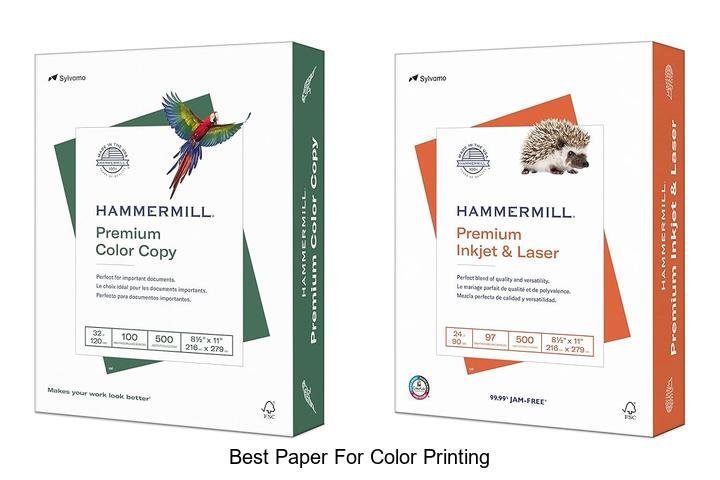
Pick 1  | Hammermill Printer Paper, Premium Color 32 Lb Copy Paper, 8.5 | Check Price On Amazon |
Pick 2  | Hammermill Printer Paper, Premium Inkjet & Laser Paper 24 Lb, | Check Price On Amazon |
Pick 3  | Threvortax 100 PCS Watercolor Paper 8.5×11 Inch 105LB/230GSM Cold Press | Check Price On Amazon |
1. Hammermill Printer Paper, Premium Color 32 Lb Copy Paper, 8.5
Looking for the best paper for color printing? Hammermill Premium Color Copy delivers vibrant, true color and crisp text on every page. This 32 lb, 500-sheet ream offers premium performance for proposals, brochures, and photos, ensuring your visuals pop with brightness and smooth toner adhesion during frequent handling every time.
This 32 lb, 500-sheet ream offers premium performance for proposals, brochures, and photos, ensuring your visuals pop with brightness and smooth toner adhesion during frequent handling every time.
Designed for high-impact color work, this 32 lb paper features a super-bright 100 brightness and ultra-smooth surface for excellent toner adhesion and precise color reproduction. Compared with standard 20 lb copy paper, it delivers richer color and deeper blacks for proposals, presentations, and marketing collateral, FSC-certified and USA-made today worldwide.
Pros
- Vivid color reproduction and sharp text for professional documents
- Ultra-smooth, 100-bright surface with reliable toner adhesion
- Heavyweight 32 lb stock that feels premium and resists show-through
Cons
- Higher cost per ream than standard 20 lb copy paper
In short, Hammermill Premium Color Copy Paper combines brightness, smoothness, and durability with responsible manufacturing, making it a strong choice for color-focused business materials and creative outputs.
2. Hammermill Printer Paper, Premium Inkjet & Laser Paper 24 Lb,
Discover the best paper for color printing with Hammermill Premium Inkjet & Laser 24 lb. This versatile, heavier-weight sheet delivers crisp images and professional results on every print—from reports to newsletters—while staying affordable. Its balanced brightness and reliable performance make it a standout choice for home offices and small businesses.
Its balanced brightness and reliable performance make it a standout choice for home offices and small businesses.
Equipped with ColorLok Technology, colors appear 30% brighter, blacks 60% bolder, and ink dries 3x faster, reducing smearing. Hammermill Premium is 24 lb,
5×11 in size, 500 sheets per ream, compatible with inkjet and laser printers. It’s acid-free, FSC-certified, offering brightness compared to 20 lb copy paper for daily use.
Pros
- ColorLok Technology delivers brighter colors, bolder blacks, and faster drying for cleaner, more vibrant prints.
- Compatibility across inkjet and laser printers ensures smooth operation with minimal jams and minimal show-through.
- Heavier 24 lb stock feels premium while remaining cost-effective, with acid-free, FSC-certified materials for lasting quality.
Cons
- Not ideal for high-end photo prints or color-critical graphics where glossy, ultra-bright finishes are required.
For everyday documents that look professional without the premium price, Hammermill Premium Inkjet & Laser Paper is a reliable, versatile choice.
3. Threvortax 100 PCS Watercolor Paper 8.5×11 Inch 105LB/230GSM Cold Press
Discover a versatile watercolor surface that doubles as a reliable color printing paper. Threvortax 100 PCS Watercolor Paper delivers 105LB/230GSM cold-press sheets with a textured finish, ideal for vibrant color blending and archival artwork.
Each sheet measures 5×11 inches and features a laid texture that enhances pigment granulation while preventing buckling. With acid-free, archival-grade paper, artwork remains bright over time.
It also supports digital printing, scanning, and crafting—making this pack a practical choice for classroom work and personal projects at home or in the studio.
Pros
- Rich color reproduction and smooth blending on the cold-press surface, thanks to 105LB/230GSM weight.
- Printer-ready versatility: compatible with inkjet printers for digital printing, scanning, and mixed-media projects.
- Acid-free, archival-grade paper that resists yellowing and preserves artwork over time.
Cons
- Only available in 8.5×11 inches, which may limit larger projects or require cutting for bigger pieces.
For shoppers comparing options, the 105LB/230GSM Threvortax watercolor paper sits between light-weight practice papers and heavier board stock, offering sturdy support without excess bulk. If you’re after the best paper for color printing with reliable watercolor performance, this 100-sheet pack provides consistent results for practice, classwork, and archival art.
4. HP Papers | 8.5 x 11 Paper | BrightWhite 24

Discover vivid, color-ready results with HP BrightWhite24. This 24-pound, extra-bright
Made in the USA from renewable forests and FSC-certified for sustainability. Ideal for presentations too.
HP BrightWhite24 is deeper and crisper, with 24-pound weight, 100 bright levels, and 165 whiteness, outperforming standard 20-lb paper for color-heavy documents. ColorLok technology enhances vivid colors, bold blacks, and quicker drying, while FSC certification and acid-free formulation support sustainable, long-lasting prints for presentations and newsletters in office environments everyday.
Pros
- ColorLok technology delivers more vivid colors, bolder blacks, and faster drying.
- Thicker 24 lb stock provides durability and reduces show-through.
- Sustainability and archival quality: FSC-certified, acid-free, and proudly made in the USA.
Cons
- Higher price versus standard 20 lb papers.
Overall, HP BrightWhite24 delivers vibrant color, reliable performance, and sustainable sourcing, making it a strong choice for color-heavy documents, presentations, and marketing materials. At around $14 per ream, it offers premium color capability and long-term value for color-critical work.
5. HP Paper Printer | 8.5 x 11 Paper | Premium

Discover the HP Paper Printer Premium—an ideal choice for color-conscious creators seeking sharp detail and vibrant imagery. This 5 x 11 ream delivers bold color, strong contrast, and reliable performance across printers.
5 x 11 ream delivers bold color, strong contrast, and reliable performance across printers. If you’re after the best paper for color printing, HP Premium32 elevates presentations, reports, and portfolios with ease.
Made in the USA, HP Premium32 uses renewable forest resources and carries FSC certification. This heavyweight 32 lb paper features 100 brightness and 163 whiteness with a super-smooth surface for precise color reproduction. ColorLok technology delivers vivid colors, bolder blacks, and faster drying for archival-quality documents.
Ideal for presentations everywhere.
Pros
- Heavyweight 32 lb stock provides rigidity and a premium feel for reports and presentations.
- ColorLok technology delivers more vivid colors, bolder blacks, and faster drying for sharp, smear-free prints.
- FSC certified and acid-free construction promotes sustainability and long-term archival quality.
Cons
- Packaging quality can be inconsistent; ensure proper packaging to prevent damage during shipping.
Overall, HP Premium32 offers color-accurate, durable results with eco-friendly credentials. Compared to standard 20 lb office paper, this 32 lb stock delivers richer color, clearer blacks, and faster drying for professional documents.
6. Hammermill Printer Paper, Premium Color 28 lb Copy Paper, 8.5

If you’re chasing the best paper for color printing, Hammermill Premium Color Copy paper delivers vibrant visuals, sharp text, and reliable performance. This 28 lb white sheet is ideal for design proposals, full-color presentations, photos, and brochures, blending premium feel with cost-effective bulk convenience for busy offices and creative teams.
It’s FSC-certified, made in the USA, designed for color copiers and color laser printers with a 99% jam-free guarantee. Compared with 20 lb paper, it delivers richer color. Choose Hammermill Premium Color Copy for standout color, dependable performance, and responsible sourcing that supports professional results in busy workplaces.
Discover HP Papers All-In, a premium 5 x 11 paper designed for vibrant color printing and dependable everyday use, widely regarded as the best paper for color printing in its class. Sourced from renewable forests and produced with zero deforestation in North America, it delivers crisp text, vivid color, and performance. Built for everyday office needs, HP All-In-One22 paper is thicker, brighter, and whiter than standard multipurpose sheets, delivering sharp text and enhanced color on all inkjet and laser printers and copiers. The 22 lb, 750-sheet Mega Ream combines durability with cost efficiency and ColorLok for faster drying and vibrant color. Choose HP All-In-One22 for reliable bulk printing with color punch, environmental responsibility, and compatibility across office equipment. This paper suits homes, schools, and small businesses seeking efficiency without sacrificing print quality or sustainability.
Integrated compatibility with a range of printers, software workflows, and finishing options dramatically improves color accuracy and overall usability of color printing paper. The choice between coated and uncoated paper shapes how ink sits on the surface and determines typical uses, with coated stock delivering sharper image clarity and vibrant colors for photos and marketing materials, while uncoated stock offers a more natural, readable result for documents and proofs. Finish options such as matte, satin, and gloss also affect color perception; matte minimizes glare and softens contrasts, satin provides a balanced sheen that preserves color depth, and gloss can intensify highlights but may shift perceived color in bright areas. When comparing brightness, whiteness, and opacity ratings, higher brightness can make colors appear more punchy, whiter papers can influence color balance, and opacity reduces show-through for two sided printing, all of which impact the final result. Considering how these elements align with your workflow and target outputs helps ensure the paper complements inks, printers, and protective coatings, delivering consistent results across proofs and final pieces. Adaptive paper that performs reliably across a range of printers, inks, and finishing options enhances color consistency and reduces waste, making it a more valuable choice. To determine value in context, evaluate how well this paper integrates with other products you rely on, including your printer model, ink compatibility, coatings, and presentation surfaces. Texture, finish, and tactile feel shape ink absorption, color depth, and the perceived quality of color heavy work, so consider whether a smooth, glossy, or textured surface aligns with your imagery and brand. Curl resistance and stability in different environments matter for stacking, cutting, and long term storage, as humidity and temperature shifts can cause curling or warping that interferes with alignment and presentation. Adaptive color printing paper that works reliably across different printers and finishing steps can significantly enhance value by reducing misfeeds and color inconsistencies. To avoid surprises, assess how this paper complements other products you use, such as inks, coatings, laminates, and binding materials, so you can predict final results. Availability, packaging, and shipping considerations influence convenience and total landed cost, especially if you need steady supply for a project or seasonal demand. Also consider recyclability, certifications like FSC or PEFC, and eco coatings that align with sustainability goals, ensuring the product can be recycled in typical local streams and carries credible environmental claims. Smooth integration with printers, inks, and finishing equipment boosts reliability and reduces setup time across jobs. When a media adapts to different printers, color management workflows, and coating options, it broadens its practical use and helps deliver consistent results on diverse devices. Color accuracy, saturation, and a reproducible gamut depend on how well the paper interacts with inks and profiles, as well as the overall system calibration. Color accuracy, saturation, and a reproducible gamut depend on how well the paper interacts with inks and profiles, as well as the overall system calibration. The ability to prevent ink bleed and feathering preserves crisp edges and clean lines, which is essential for sharp text and vivid graphics. Showthrough and paper opacity in double-sided prints matter for readability and a professional look, and compatibility with binding or lamination can further streamline production. By evaluating how this media integrates with existing tools, you can reduce surprises at print time and achieve dependable performance across a range of projects. Compatible papers that adapt smoothly with printers, coatings, and finishing devices can dramatically improve color accuracy and workflow efficiency. Understanding how ICC profiles, color management, and printer settings translate digital intent into printed results helps ensure consistency across devices and media. How the paper handles humidity and curl, how it feeds through different printers, and its storage needs influence reliability and long term performance. How the paper handles humidity and curl, how it feeds through different printers, and its storage needs influence reliability and long term performance. Inkjet and laser systems interact with coatings and bases in different ways, so identifying which papers work best with each type helps prevent bleed, set off, or color shifts, and preserves sharp detail and color density. Testing a sample set with your actual printer and ink or toner can reveal how finishing options like coatings influence gloss, texture, and durability. Papers that adapt across printers, inks, and finishing processes can dramatically reduce reprints and waste, while keeping color alignment consistent from device to device. For photos and brochures, choose surfaces and coatings that render skin tones softly and provide vivid highlights without metamerism, ensuring the paper complements your printer’s inkset and the project’s workflow. For color rich documents and proofs, opt for options that maintain sharp color blocks, stable brightness, and reliable handling through binding or laminating so proofs align with final outputs in real world lighting. The way the paper integrates with other products matters because it impacts workflow efficiency, finishing choices, and the perceived quality of the result across projects. When testing a new paper, print a small test set and compare it against a reference, assessing color accuracy, detail in shadows and highlights, and how the surface behaves with toner or pigment inks as you evaluate compatibility with your equipment. By weighing these integration aspects early you can select a product that delivers consistent results across the typical mix of devices, inks, and finishes in your setup. Finish (gloss, satin, matte) affects glare and color depth, weight (gsm) influences feel and rigidity, brightness impacts color accuracy, and coating (coated vs uncoated; gloss/satin/matte coatings) changes ink uptake and sharpness. Archival properties, such as acid-free and lignin-free composition and proven fade resistance, determine long-term durability of the prints. Inkjet papers are coated to absorb liquid inks, delivering smooth color gradients and higher photo-grade color fidelity, while laser papers are optimized for dry toner and fast fusing, often with brighter whites but less nuanced color. For best color fidelity and longevity, use archival pigment-inkjet papers with acid-free stock and pigment inks; laser prints are durable but generally don’t reach photo-grade color accuracy over time. Glossy finishes make colors appear most vibrant with the highest contrast, but their shiny surface can cause glare and angle-dependent color shifts that hurt accuracy. Matte minimizes glare and yields softer, more neutral colors with lower contrast, while satin/semigloss and lustre sit between glossy and matte, offering balanced vibrancy and controlled glare for generally reliable color reproduction. Brightness (L*) and whiteness determine how much light the paper reflects and its spectral bias, so brighter/whiter stock makes colors read lighter and can tilt hues toward blue under daylight (D65). Because papers differ in spectral reflectance, the same color patch can yield different L*a*b* values and metameric shifts across papers, altering perceived color reproduction. For high-color-fidelity prints, use pigment-ink papers from established fine-art brands such as Hahnemühle (Photo Rag, Photo Rag Baryta), Canson Infinity (Rag/Photo Baryta), Moab (Entrada/Satin), or premium Epson/Canon papers. Test by installing the paper’s ICC profile for your printer/ink, printing a standard color target (ColorChecker or IT8), and comparing the soft-proofed output to a reference, then repeat with other papers to identify the best match. Choosing the best color printing paper starts with your goal. Glossy papers deliver vivid colors and deep blacks for portraits. Satin or lustre balances brightness. Matte fine-art papers offer archival quality and subtle color, art prints. Weight and coating affect contrast and durability. Bottom line: For vibrant photos, use glossy; for longevity, matte or satin with proper color management.Pros
Cons
7. HP Papers | 8.5 x 11 Paper | All In

Pros
Cons
Here are some engaging buying-guide title options for the keyword best paper for color printing:
– Best Paper for Color Printing: The Ultimate Buying Guide for Vivid, Accurate Prints
– How to Choose the Best Paper for Color Printing: A Buyer’s Guide to Colors That Pop
– From Matte to Gloss: Your Essential Guide to the Best Paper for Color Printing
– Print Like a Pro: The Definitive Guide to Buying the Best Paper for Color Printing
Paper types for color printing
Physical characteristics you need
Cost, availability, and sustainability
Print quality factors to consider
Printer compatibility and setup
Use case scenarios and quick testing tips
FAQ’s
What Factors Should You Consider When Choosing The Best Paper For Color Printing (Finish, Weight, Brightness, Coating, Archival Properties)?
What Are The Key Differences Between Inkjet And Laser Papers For Color Printing, And Which Are Best For Color Fidelity And Longevity?
How Does Paper Finish (Gloss, Satin/Semigloss, Matte, Lustre) Affect Color Vibrancy, Contrast, And Accuracy In Color Prints?
How Do Brightness And Whiteness Ratings (Cie L*A*B*, D6Influence Perceived Color Reproduction On Different Papers?
Which Paper Brands Or Product Lines Are Recommended For High-Color-Fidelity Prints (Photos, Art Reproductions, Marketing Materials), And How Should You Test Paper Choices With Your Printer And Icc Profiles?
Conclusion