Best Paper For Printing: Secrets For Premium Results
Choosing the best paper for printing directly impacts color fidelity, detail, and durability across home and professional workflows. This piece examines how paper weight, brightness, finish, and coating influence image reproduction and text clarity, helping readers understand what makes a printing medium suitable for specific uses.
Understanding these factors is essential for achieving reliable results, accurate color rendering, and consistency across devices. These factors influence overall quality and presentation.
The topic remains relevant across photography, design, and print production contexts. Deeper comparisons and expert findings await those seeking more nuanced insights.
– Material Matters: Picking the Right Sheet for Peak Print Quality – Sheets That Shape the Output: A Quick Guide to Paper Choices for Production – From Texture to Brightness: Navigating Paper Options for Perfect Prints Would you like more options or a specific tone (tech, friendly, premium)?
| Image | Product | Price |
|---|---|---|
Pick 1  | HP Printer Paper | 8.5 x 11 Paper | Copy | Check Price On Amazon |
Pick 2 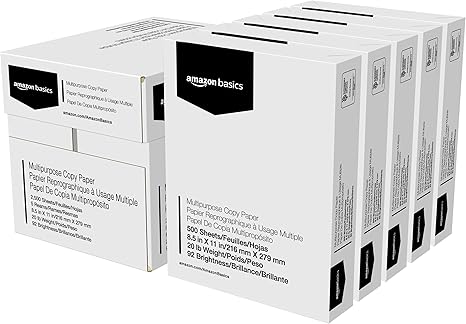 | Amazon Basics Multipurpose Copy Printer Paper, 20 lb, 8.5 x | Check Price On Amazon |
Pick 3  | Amazon Basics Multipurpose Copy Printer Paper, 20 lb, 8.5 x | Check Price On Amazon |
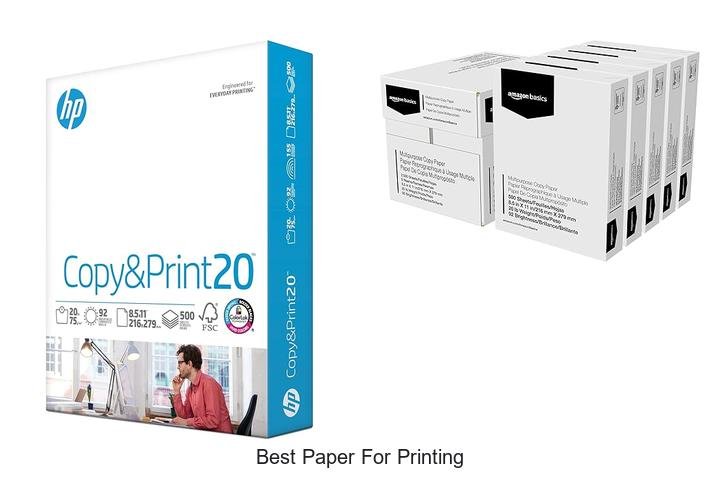
1. HP Printer Paper | 8.5 x 11 Paper | Copy
Discover the best paper for printing with HP Printer Paper 5 x
This 20-lb, 92-bright white stock delivers crisp text and vivid images every time, backed by FSC certification and renewable sourcing. Ideal for home, school, and office, it resists yellowing and keeps documents pristine in busy environments everyday.
HP Copy&Print20 paper weighs 20 pounds and delivers sharp, professional prints with 92 brightness. It is sourced from renewable forests with 0% deforestation in North America and FSC-certified, contributing toward LEED MR1 credits. Each 500-sheet pack is wrapped in a polyurethane-coated paper wrapper; ColorLok technology enhances color, blacks, and drying on printers.
Each 500-sheet pack is wrapped in a polyurethane-coated paper wrapper; ColorLok technology enhances color, blacks, and drying on printers.
Pros
- Premium performance on HP and all major printers, delivering crisp text and reliable copies.
- Eco-friendly and certified: FSC-certified, 0% deforestation in North America, LEED MR1 credit eligible.
- ColorLok technology for more vivid colors, bolder blacks, and faster drying, plus moisture protection from the wrapper.
Cons
- Limited to 8.5 x 11 size and 20 lb matte stock; not ideal for glossy photo printing or cardstock projects.
For everyday home, school, and office printing, HP Copy&Print20 balances reliability, archival-quality performance, and eco-conscious sourcing at a competitive price. It’s a practical choice for documents, forms, and routine copies that demand consistent results.
2. Amazon Basics Multipurpose Copy Printer Paper, 20 lb, 8.5 x
Looking for the best paper for printing that is dependable and cost-effective? Amazon Basics Multipurpose Copy Printer Paper offers consistent performance for home or office printing. It provides 2,500 sheets per case, delivering value, versatility, and quality for everyday documents and presentations, with clean, reliable results across printers.
It provides 2,500 sheets per case, delivering value, versatility, and quality for everyday documents and presentations, with clean, reliable results across printers.
Designed for laser and inkjet printers, copiers, and fax machines, this 20 lb white paper dries quickly, resists jams, and delivers crisp text with bright 92 brightness (92 GE; 104 Euro). Each
Compared with premium bright white papers, it offers reliable everyday performance at a budget-friendly price for home or office use.
Pros
- 5 ream case (2,500 sheets) in one purchase delivers long-lasting value for busy homes or offices.
- Versatile compatibility with laser and inkjet printers, copiers, and fax machines; smooth 20 lb weight promotes even ink/toner distribution and quick drying.
- Bright white, acid-free sheet for sharp contrast and professional-looking documents that resist yellowing over time.
Cons
- Not the brightest option for photo-grade color prints; brightness is 92, lower than premium papers.
For everyday printing needs, this Amazon Basics paper offers dependable performance, solid brightness, and competitive pricing—making it a practical choice wherever reliable paper matters.
3. Amazon Basics Multipurpose Copy Printer Paper, 20 lb, 8.5 x
Searching for the best paper for printing? Amazon Basics Multipurpose Copy Printer Paper delivers dependable, affordable results for home and office use.
5 x 11 white paper provides smooth operation, quick drying, and sharp text and color across laser, inkjet, copier, and fax devices.
With a smooth 20 lb weight, the paper feeds consistently and dries quickly to minimize jams while preserving toner and ink fidelity. Bright white stock (92 GE) provides strong contrast for crisp text and vibrant color. Virgin, acid-free composition helps prevent yellowing, keeping documents professional over time.
Pros
- Compatible with laser, inkjet printers, copiers, and fax machines for versatile use
- Smooth 20 lb stock dries quickly, reducing jams and improving double-sided printing
- Bright white, 92 GE stock with acid-free, virgin composition delivers sharp text and vivid color while resisting yellowing
Cons
Choose this paper for reliable, cost-effective printing that keeps office workflows moving smoothly—ideal for home use, schools, and small businesses. Great value at about $19 per 1,500-sheet case.
4. HP Printer Paper | 8.5 x 11 Paper | Office

Discover dependable everyday printing with HP Printer Paper | Office This offers smooth feeds, bright text, and durable pages for home, school, and office use. Made in USA from renewable forests, this 20 lb
Made in USA from renewable forests, this 20 lb 5 x 11 paper balances performance and responsibility, delivering crisp black-and-white prints every time, consistently.
Optimized for HP technology, this paper performs well on HP printers and copiers. ColorLok delivers blacks and faster drying. Compared with papers, it offers 92 brightness and 20 lb weight; each 3-ream contains 1,500 sheets, FSC certified, acid-free, and made in the USA with 0% deforestation in North America today.
Compared with papers, it offers 92 brightness and 20 lb weight; each 3-ream contains 1,500 sheets, FSC certified, acid-free, and made in the USA with 0% deforestation in North America today.
Pros
- Smooth feeding and reliable performance for high-volume printing.
- ColorLok technology provides vivid color, bold blacks, and faster drying.
- FSC-certified, acid-free, and made in the USA from renewable forest resources with 0% deforestation.
Cons
- Higher price than most generic, non-branded 20 lb papers.
For everyday documents you can trust, HP Office20 combines consistent performance with sustainable sourcing, making it a strong choice for homes and offices that value reliability and responsibility in their paper workflow.
5. Hammermill Printer Paper, Premium Inkjet & Laser Paper 24 Lb,

Discover printed projects that look sharp and professional with Hammermill Premium Inkjet & Laser Paper—the best paper for printing for many offices. This versatile 24 lb sheet delivers bold color, precise text, and reliable performance across printers, making it ideal for newsletters, reports, forms, and everyday office tasks at work.
ColorLok technology makes colors 30% brighter, blacks 60% bolder, and ink dries three times faster for less smearing and faster handling. 97 brightness on a blue-white sheet provides sharp text and vivid images. FSC-certified, acid-free, and made in the USA, it runs smoothly through all office equipment, every single print.
FSC-certified, acid-free, and made in the USA, it runs smoothly through all office equipment, every single print.
Pros
- Excellent print quality with 97 brightness and blue-white shade for crisp text and vibrant images.
- ColorLok technology delivers 30% brighter colors, 60% bolder blacks, and faster ink drying to reduce smearing.
- Reliable performance across printers and copiers; acid-free and FSC-certified for long-lasting prints and sustainable sourcing.
Cons
- Slightly heavier and bulkier than standard 20 lb paper, requiring more storage space.
For better everyday printing that still feels premium, Hammermill Premium Inkjet & Laser Paper offers a strong balance of quality, performance, and value—making it a dependable choice for home offices and busy workspaces alike. Compared with typical 20 lb copy paper, this 24 lb stock provides a more substantial feel without the high price of specialty papers.
6. HP Papers | 8.5 x 11 Paper | All In

Introducing HP Papers All-In, the reliable 5 x 11 sheet stock designed for crisp text, vivid color, and dependable performance across home, office, and classroom printing—the best paper for printing color documents. Sourced from renewable forests with 0% deforestation in North America, it pairs sustainability with strong compatibility on HP devices and most printers.
Sourced from renewable forests with 0% deforestation in North America, it pairs sustainability with strong compatibility on HP devices and most printers.
HP All-In is thicker, brighter, and whiter than ordinary multipurpose papers, engineered to excel in both inkjet and laser printers. ColorLok technology enhances color realism and faster drying, while FSC certification supports sustainable forestry. The 22 lb smooth surface reduces show-through and resists jams for reliable daily use, and the Mega Ream includes 750 sheets.
The 22 lb smooth surface reduces show-through and resists jams for reliable daily use, and the Mega Ream includes 750 sheets. Ideal for presentations and reports.
Pros
- Optimized for HP technology and compatible with most inkjet and laser printers for reliable results.
- ColorLok technology delivers more vivid colors, bolder blacks, and faster drying.
- FSC-certified, made in the USA, supporting sustainable forestry and local manufacturing.
Cons
- Limited format options: only 8.5 x 11, 22 lb Mega Ream (750 sheets) are available in this listing.
Overall, this bulk paper delivers a compelling blend of sustainability, performance, and value, making it a dependable choice for homes, offices, and schools that need reliable color and text quality for everyday printing.
7. HP Paper Printer | 8.5 x 11 Paper | Premium

Discover premium printing performance with HP Premium32 Paper, the best paper for printing needs. Sourced from renewable North American forests and produced with zero deforestation, it delivers sturdy weight, bright color, and a clean surface for sharp text and vibrant images across documents, presentations, and photos you’re proud to share.
Featuring 32‑pound weight, 100 brightness, and 163 whiteness, HP Premium32 delivers a super-smooth surface for full-color printing. ColorLok technology enhances color, deepens blacks, and speeds drying, while FSC certification and acid-free formulation support durability and archival quality.
Pros
- Renewable forest sourcing with 0% deforestation and FSC certification ensures responsible printing materials.
- Heavyweight 32 lb stock with 100 brightness and 163 whiteness delivers crisp text and vibrant color; ColorLok enables faster drying.
- Acid-free formulation provides archival-quality prints that resist yellowing, suitable for documents, presentations, and marketing materials.
Cons
- Occasional packaging can be insufficient, risking damaged sheets during shipping.
HP Premium32 Paper combines sustainability, premium feel, and versatile performance to elevate everyday printing and presentations—making it a strong choice for professional, high-impact results.
Print Like a Pro: The Ultimate Buying Guide to the Best Paper for Printing
Weight, size, and thickness
A paper that adapts smoothly with printers, inks, coatings, and finishing tools can boost workflow efficiency and reduce waste. This kind of compatibility matters because it influences drying times, color consistency, and how reliably sheets feed through different devices. Paper weight, measured in gsm, shapes how substantial a sheet feels and how it holds up to handling and frequent page turns.
Paper weight, measured in gsm, shapes how substantial a sheet feels and how it holds up to handling and frequent page turns. Common sheet sizes such as A4, Letter, and Legal influence printer compatibility and how well stacks or trays accommodate the stock. Caliper and stiffness affect feeding reliability, edge resilience, and the finish when folded or bound.
By evaluating how the stock integrates with inks, coatings, and binding options, you can opt for a choice that delivers consistent results across print jobs.
Print compatibility and ink interaction
Paper that adapts to different printers and finishing processes extends its useful life and smooths workflows by delivering reliable results across devices. It matters to evaluate how the stock behaves with inkjet versus laser printers, since each class expects different drying patterns, absorption rates, and smearing risks depending on the substrate finish and coating.
Pigment inks typically offer stronger lightfastness and water resistance on this material, while dye inks can deliver deeper, more saturated colors but may require compatible coatings or faster drying to prevent bleed. Understanding how the paper interacts with coatings, laminates, and other finishing steps helps ensure that colors stay true and text remains sharp when the surface is subjected to handling or sealing layers. In practice this means checking ink compatibility and performance in real world conditions and confirming that you can achieve consistent results without extra steps or touch ups.
By weighing these integration points against your intended workflow you gain real value from the choice and reduce the risk of surprises later on.
Color, brightness, and white point
Adaptive compatibility with a wide range of printers and finishing tools adds value by delivering consistent results across devices and workflows. When evaluating this paper, consider how it integrates with other supplies in your setup to avoid surprises at the print stage, such as inks, lamination, or binding processes.
ISO brightness and whiteness ratings provide a practical sense of how the sheet handles glare and opacity, influencing legibility and contrast in different lighting. Color accuracy hinges on how well your color management tools and ICC profiles align with the paper, so check whether your software supports the appropriate color space and whether the manufacturer provides profile data or printer-specific presets. Surface texture also shapes color accuracy and contrast; coated or satin finishes can intensify saturation and sharpness, while textured surfaces may soften details and alter perceived contrast.
In short, compatibility and performance across these dimensions help ensure predictable results, reduce waste, and streamline production across multiple devices and workflows.
Use case fit: documents, photos, and projects
Adaptive paper that works with a wide range of printers, inks, coatings, and finishing equipment tends to improve consistency and cut waste, making it easier to predict results across different projects. Evaluating how this material integrates with these products is crucial because mismatches can cause jams, ink smearing, or unexpected curling, which disrupts workflows and undermine professional output.
For resumes, reports, and presentations, the right integration can ensure sharp text, precise color, and reliable folding, and this matters for creating a polished impression. For photo printing and gallery quality options, compatibility with photo printers, archival inks, and protective coatings ensures accurate color reproduction and long term stability. Durability, curling, and handling for everyday use come into play as humidity, stacking, and frequent handling can change how the paper behaves over time, so assessing how the material performs when framed, stored, or moved helps prevent surprises after the purchase.
Paper types and finishes
Adaptive compatibility with printers, inks, and finishing tools often increases value by reducing trial and error and smoothing workflows. A thorough evaluation should consider how the paper performs across different printing methods and how well it integrates with standard accessories like cutters, binding machines, or lamination setups.
Coated vs uncoated options influence how ink sits on the surface, affecting edge sharpness, color depth, and dry time. Matte, satin, glossy, and luster finishes each offer a distinct look and feel, changing readability, glare, and the way photos reproduce depth. Photo paper benefits image heavy tasks with richer color and better tonal range, while plain text and document paper offer clean readability and lower show-through for everyday documents.
Sustainability, cost, and availability
Interoperability across printers and finishing tools boosts productivity by reducing setup time and minimizing misfeeds, so one stock can flow through multiple devices with fewer manual tweaks. A paper that adapts well to existing workflows delivers more consistent results across formats and reduces the risk of surprises during production.
For many buyers, price per sheet and overall value matter because a compatible stock can lower waste and downtime across a print run. Recyclability and eco certifications signal you can align environmental goals with performance across processes. Stock reliability and steady supply help plan production without interruptions, while thoughtful packaging protects sheets in transit and storage and flexible packaging quantities can scale with different workloads.
FAQ’s
What Is Archival/Acid-Free Paper, And How Does It Impact Color Stability And Longevity Of Prints?
Archival/acid-free paper is made from lignin-free, pH-neutral or alkaline materials (often cotton rag or high-quality cellulose) and buffered to resist acid migration. This minimizes yellowing and pigment degradation, improving color stability and extending the life of the print under proper archival storage.
How Can I Ensure Color Accuracy Across Different Papers (Using Icc Profiles, Calibrating Monitors, And Selecting The Right Printer Settings)?
Install and select the paper’s ICC profile in your print/soft-proof workflow and use a consistent rendering intent (Perceptual or Relative Colorimetric) to map colors to that paper. Calibrate your monitor with a hardware device to create a display ICC profile, view under consistent lighting, and in the printer driver choose the same paper ICC profile with proper color management (disable automatic adjustments if needed).
What Factors Should I Consider When Choosing Paper For Different Printing Needs (Photos, Artwork, Documents)?
Consider paper weight (gsm), finish (gloss/satin/matte), texture, and brightness, since these affect color vibrancy, sharpness, and the tactile feel. Also check printer compatibility (ink vs toner, coatings) and choose appropriate stock for your use—heavier, coated papers for photos/art and lighter, opaque, uncoated papers for documents, with archival options if longevity matters.
How Do Paper Weight (Gsm), Thickness, Brightness, And Coating Affect Print Quality And Printer Feed Reliability On Inkjet Vs Laser Printers?
GSM and thickness mainly affect feed reliability and curl: heavier/thicker stock often jams inkjets that aren’t designed for it, while lasers typically handle a wider weight range with proper settings, and higher brightness improves perceived contrast on both. Coatings influence print quality and adhesion: inkjet coatings (porous/light finishes) boost color saturation and sharpness but can slow drying and increase curl, whereas laser-grade coatings or uncoated stock favor even toner fusing and fewer feed issues.
What Are The Pros And Cons Of Matte, Glossy, Satin, Luster, And Metallic Finishes, And When Is Each Best Used?
Matte hides flaws with a soft, non-reflective look but is harder to clean, so it’s best used on ceilings or low-traffic walls; glossy gives vibrant color and a durable, wipe-clean surface but shows fingerprints, scratches, and glare, making it ideal for high-traffic areas, trim, and cabinetry. Satin and luster offer a middle ground with a mild sheen and better washability for most living spaces (satin on walls, luster in moisture-prone areas), while metallic finishes add depth and drama and are best used as accents or on furniture/trim rather than full-room coverage due to lighting and maintenance considerations.
Conclusion
Bottom line: The best paper for printing depends on your needs. For photos with vibrant color and sharp detail, choose high-brightness, archival-grade, acid-free inkjet paper (240–320 gsm) with a matte or satin finish.
For everyday text, a bright, smooth, 90–110 gsm printer paper works well. Also consider printer compatibility and cost per sheet. Ask for samples to compare brightness and opacity.